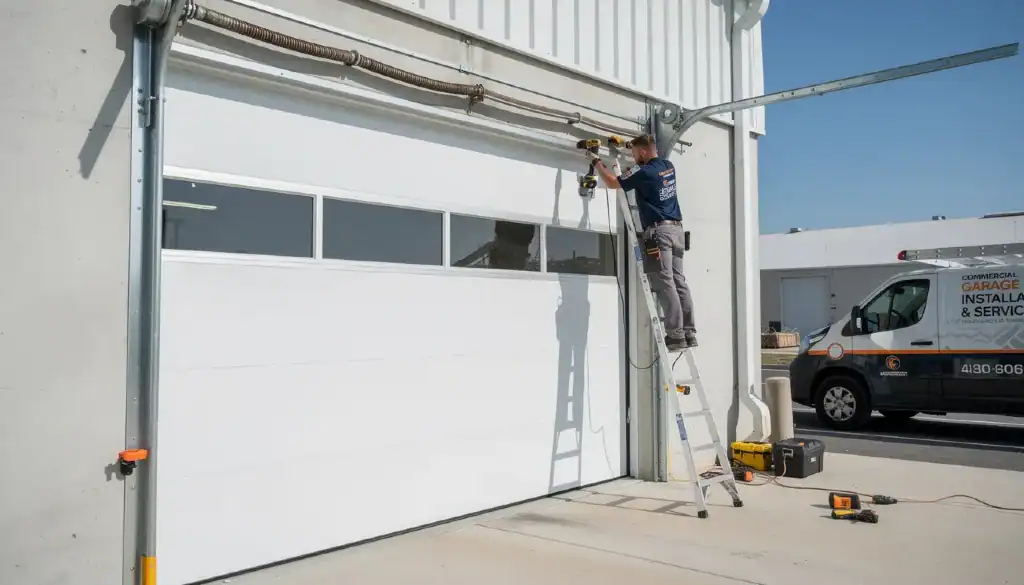
If you run a warehouse, auto shop, storage facility, or any business that depends on reliable access, commercial garage door installation is one of the most important investments you can make. Unlike residential ones, commercial doors are engineered to handle heavy daily operations, extreme weather, and constant use. Getting the right commercial garage door installed correctly — and by the right professionals — can mean the difference between smooth operation and costly downtime.
This guide walks you through everything local businesses in Oklahoma City and surrounding areas need to know before, during, and after the installation process.
Why Commercial Garage Doors Are Different From Residential Ones

Many business owners assume a garage door is a garage door. But commercial properties have unique needs that residential doors simply cannot meet. Commercial doors are built with heavier-gauge materials, more powerful motors, and enhanced safety features designed for high-traffic environments.
Where a residential door might open and close a handful of times per day, a commercial door at a warehouse or auto shop could cycle dozens or even hundreds of times. That level of wear demands durable doors with reinforced panels, heavy-duty hinges, and components engineered for long-term performance.
Beyond durability, commercial garage door systems often need to meet specific safety codes and building codes that do not apply to homes. Fire-rated doors, for example, are required in certain commercial spaces to slow the spread of fire and protect both people and property. Failing to meet these standards during installation can result in fines, failed inspections, and serious safety risks.
Step One: Site Assessment and Planning
The first step in any professional commercial garage door installation is a thorough site assessment. Before a single panel goes up, your installation team needs to evaluate the space, measure the opening, assess the structural integrity of the surrounding walls, and identify any operational requirements specific to your business.
During this phase, professionals will look at:

- Door dimensions and clearance — Commercial openings vary widely. A loading dock at a distribution center has very different requirements than the service bay of an auto shop. Getting the measurements right is essential to ensure proper installation and smooth movement from day one.
- Building codes and necessary permits — Oklahoma City and surrounding municipalities have specific requirements for commercial door installation. A reputable company will pull the necessary permits and ensure every aspect of the job meets local safety standards and building codes before work begins.
- Power and opener integration — Commercial openers require dedicated power sources and must be compatible with your existing electrical setup. This is the time to plan for remote controls, keypad access, and any advanced locking mechanisms your business may need for security purposes.
- Dock equipment compatibility — For warehouses and distribution facilities, the door must work in coordination with existing dock equipment such as levelers, seals, and bumpers. Ignoring this during planning leads to expensive problems after installation.
Choosing the Right Commercial Garage Door
Selecting the right door for your commercial property comes down to understanding your environment, your budget, and how the door will be used. Here is a breakdown of the most common commercial door types:
Rolling Steel Doors
Rolling steel doors are one of the most popular choices for warehouses, storage facility locations, and commercial properties that need maximum security with minimal clearance requirements. Rather than swinging out or folding in sections, rolling steel doors coil around a drum above the opening, making them ideal for spaces where interior and exterior clearance is limited.
These doors are built to be secure and can be paired with advanced locking mechanisms for enhanced overnight security. They come in slat configurations that provide varying levels of insulation and visibility depending on your business needs.
Sectional Steel Doors
Sectional steel doors are another widely used option for commercial garage door installation. These doors are made up of horizontal panels connected by hinges that allow the door to travel up and overhead along a track system. They offer excellent insulation options, which is critical for businesses looking to reduce energy costs in temperature-sensitive environments.
Mounting panels on a sectional door system requires precision. Each section must be aligned properly, and the moving parts — including springs, rollers, and hinges — must be tensioned and adjusted for optimal performance. This is not a job for an amateur. Improper installation creates safety risks and leads to premature wear.
Roll Up Doors
Similar in concept to rolling steel doors but available in lighter-gauge options, roll up doors are frequently used in self-storage units, retail applications, and service windows. They are easy to operate, require minimal maintenance, and can be integrated with commercial openers for hands-free access.
Fire Rated Doors
For businesses operating in spaces where fire safety is a regulatory requirement, fire rated doors are non-negotiable. These doors are designed to contain fire and smoke for a specific period of time — typically 1, 2, or 3 hours — giving occupants time to evacuate and limiting property damage. Installing fire rated doors is often a condition of your commercial property’s occupancy permit, and they must be installed according to strict manufacturer and code specifications.
The Commercial Garage Door Installation Process
Once you have completed your site assessment and selected your door type, the installation process begins in earnest. Here is how a professional installation unfolds:

- Framing and header preparation — The opening must be properly framed to support the weight and mechanical load of the door system. This includes installing the header bracket and ensuring the surrounding structure can handle the forces involved.
- Track installation — The vertical and horizontal tracks are mounted to the walls and ceiling of the opening. Proper alignment at this stage is critical to ensure smooth movement throughout the life of the door. Any deviation in the track system will cause the door to bind, wear unevenly, or come off track entirely.
- Mounting panels — For sectional steel doors, each panel is installed from the bottom up, with hinges connecting adjacent sections. Rollers are inserted into the track as each panel is added, and joints are checked to ensure proper alignment.
- Spring and cable assembly — This is one of the most technical and potentially dangerous parts of the installation. Commercial springs are under enormous tension and must be installed by trained professionals. Improperly tensioned springs can snap, causing serious injury and significant damage to the door and surrounding property.
- Garage door opener installation — The commercial opener is mounted to the ceiling and connected to the door via a drive mechanism. Professionals will program the force settings and travel limits to ensure the door opens and closes completely without straining the motor or creating pinch points.
- Safety sensor installation and testing — Safety sensors are mounted near the bottom of the door opening to detect obstructions. These sensors are a code requirement for virtually all commercial powered garage doors and must be positioned and tested correctly. If a sensor is misaligned or improperly installed, the door may not reverse as expected, creating a serious hazard.
- Final inspection — Before the job is considered complete, the installation team conducts a final inspection. This includes checking all hardware for proper torque, testing the opener through multiple cycles, verifying that safety sensors are functioning, and confirming that the door meets all applicable safety standards and building codes.
The Importance of Energy Efficiency in Commercial Door Selection
For businesses in Oklahoma City that deal with extreme summers and cold winters, energy efficiency is a significant consideration. A poorly insulated commercial garage door can cause your heating and cooling costs to spike dramatically, particularly in spaces where the door is a major part of the building envelope.
Insulated sectional steel doors can dramatically reduce energy costs by minimizing heat transfer through the door panel. Higher R-values indicate better insulation performance. For auto shops, food distribution facilities, and climate-controlled storage facility spaces, the right commercial garage door with proper insulation pays for itself over time.
Energy efficiency is not just about insulation, however. Proper installation — including ensuring the door seals tightly against the floor and sides of the opening — is equally important. Even a high-quality insulated door will fail to reduce energy costs if gaps allow outside air to penetrate.
Why Professional Installation Matters
It might be tempting to cut costs by attempting a DIY commercial door installation or hiring an under-qualified contractor. But with commercial properties, the stakes are simply too high. Professional service from an experienced garage door installation team ensures that:
The door meets all applicable safety codes and building codes. Your business is protected from liability in the event of a door-related accident. The door performs as expected, reducing the risk of costly downtime. All moving parts are properly lubricated to reduce friction and extend the life of the system. Your opener integration is correctly configured, including force settings and safety sensor calibration.
Oklahoma City rely on qualified local professionals who understand the region’s specific climate conditions, building requirements, and commercial operational demands. Shortcuts in the installation process can compromise safety, void manufacturer warranties, and create problems that cost far more to repair than the original installation.
Maintaining Your Commercial Garage Door After Installation

Professional installation is the foundation, but ongoing maintenance is what keeps a commercial garage door performing at its highest standards for years to come. After installation, a routine maintenance plan should include:
Lubricating all moving parts — hinges, rollers, springs, and tracks — to reduce friction and prevent premature wear. Testing safety sensors regularly to confirm they respond correctly to obstructions. Inspecting panels for dents, corrosion, or damage that could affect structural integrity or insulation performance. Checking force settings on the opener to ensure the door stops and reverses appropriately. Verifying that all advanced locking mechanisms and security features are functioning correctly.
Most commercial garage door companies offer scheduled maintenance programs that keep your system in top condition and help you avoid unexpected breakdowns during daily operations.
Ready to Get Started?
Whether you need rolling steel doors for a warehouse, sectional steel doors for an auto shop, or fire rated doors for a regulated commercial space, The Garage Door Company is ready to help. We serve Oklahoma City and surrounding communities with professional garage door installation, repair, and maintenance services built around your unique needs.
Contact us today for a free estimate and let our team help you find the right commercial garage door for your business.