When it comes to choosing the right garage door materials for your home, one of the biggest decisions you’ll face is whether to go with an insulated or a non-insulated option. This choice affects far more than just the look of your home; it impacts your energy bills, noise control, durability, and even the comfort of your daily life. Whether you have an attached garage that connects to your living space or a standalone detached garage at the back of your property, understanding the difference between insulated vs non-insulated garage doors can help you make the right call.
At The Garage Door Company in Edmond, Oklahoma, we help homeowners navigate exactly this kind of decision every day. In this blog, we’ll break down everything you need to know so you can make an informed choice that suits your home, climate, and budget.
What Are Insulated and Non-Insulated Garage Doors?
Before comparing them, it’s worth knowing what sets these two types of doors apart in terms of materials and construction.

Insulated Garage Doors
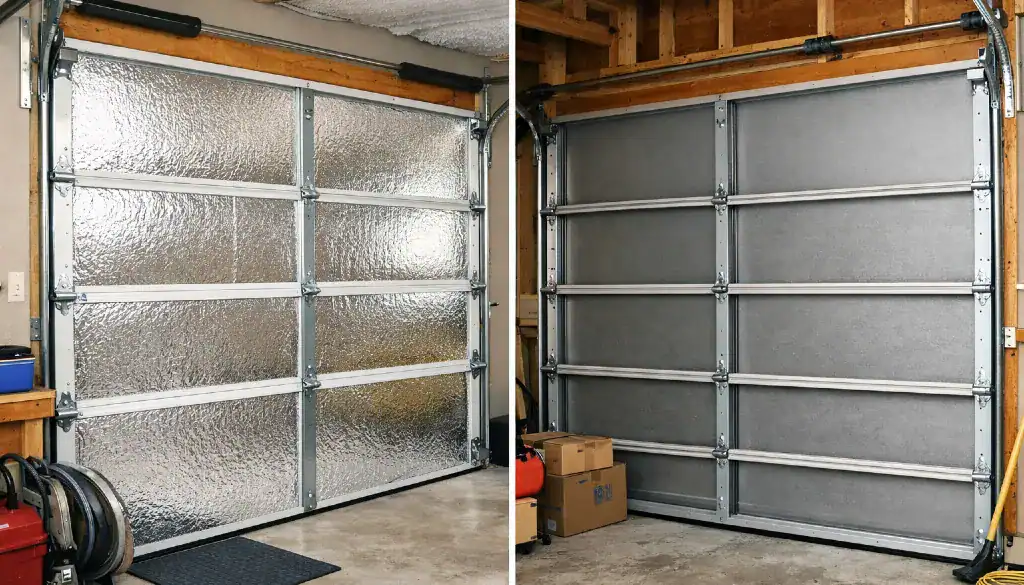
An insulated garage door is built with multiple layers, typically steel panels with a core of polyurethane or polystyrene foam sandwiched in between. This design creates a thermal barrier that slows heat transfer between the inside of your garage and the outside air. The effectiveness of this barrier is measured by an R-value, the higher the R-value, the better the door is at maintaining a stable temperature inside. Doors filled with polyurethane tend to achieve higher R-values and also add to the structural integrity of the door, making them more durable and resistant to dents and warping.
Non-Insulated Garage Doors
A non-insulated garage door, on the other hand, is typically made of a single layer of steel or another material with no foam or thermal core. These uninsulated doors are lighter in weight and more affordable upfront, but they offer little protection against the outside temperatures. Since there are no added layers to buffer the environment, your garage is more exposed to extreme temperatures in both winter and summer. They are straightforward in design, which keeps their cost down and makes installation simpler.
Energy Efficiency: A Big Difference in Your Bills
One of the most important factors homeowners consider is energy efficiency, and this is where insulated doors truly shine over their non-insulated counterparts.
When your garage shares a wall with your house, as is the case in attached garages, the temperature inside your garage directly affects the temperature inside your home. Without proper garage door insulation, your heating and cooling system has to work harder to compensate, which drives up your energy costs. An insulated garage acts as a buffer zone, reducing heat transfer through the shared wall and helping keep warmth inside during winter and cool air in during summer.
Homeowners with insulated garage doors often report reduced energy bills, especially in climates that experience harsh winter cold or intense summer heat. The savings over time can make the initial investment well worthwhile, and can even offset the higher upfront cost compared to non-insulated doors.
For a detached garage that doesn’t connect to your house, the energy savings are less dramatic. If you’re simply storing tools or parking your car, you may not need to regulate the temperature as precisely. However, if you use the space as a workshop, gym, or hobby room, climate control becomes a major priority.
Noise Reduction: Keeping Things Quiet

Another area where insulated garage doors have a clear advantage is noise reduction. The multiple layers of material, especially when filled with dense polyurethane foam, absorb vibrations and dampen sound significantly more than a single layer door ever could.
This matters for several reasons. If you run power tools in your garage, the insulation helps contain the noise and prevents it from disturbing your neighbors. On the flip side, if your home is located near busy streets or in a noisy neighborhood, an insulated door can help reduce noise pollution coming in from outside, making your garage; and the rooms adjacent to it, noticeably quieter.
Non-insulated ones tend to rattle and amplify sound more easily, which can be a daily annoyance whether you’re opening the door early in the morning or late at night. If noise control is a concern for your household or your neighbors, this alone could be a compelling reason to go insulated.
Durability and Structural Integrity
When comparing how long each type of door lasts, insulated garage doors tend to come out ahead. The foam core, particularly polyurethane, bonds to the inner and outer steel panels, creating a unified structure that is far more resistant to dents, dings, and warping from daily use.
Non-insulated doors rely on a single layer of material, which makes them more vulnerable to impact. A stray basketball or an accidental bump from your car can leave a noticeable dent. Over time, exposure to outside temperatures and moisture can also cause warping or corrosion in lower-quality non-insulated steel doors.
The lighter weight of non-insulated doors can put more strain on your opener over time, as the mechanism wasn’t designed to compensate for a door that flexes or rattles. This can accelerate wear on the opener and other moving parts, leading to more frequent repairs. In contrast, the added rigidity of insulated counterparts tends to be gentler on the entire system.
Pros and Cons at a Glance
Insulated Garage Doors — Pros
- Superior energy efficiency and reduced energy bills in attached garages
- Better noise reduction; ideal for homes near busy streets or for those using power tools
- Greater durability thanks to multiple layers and polyurethane or foam bonding
- Helps maintain a stable temperature in the space year-round
- Enhances curb appeal with a more solid, polished appearance
- Higher thermal resistance and R-value for better climate control
- Long-term savings can outweigh the initial investment
Insulated Garage Doors — Cons
- Higher upfront costs compared to non-insulated doors
- Heavier, which may require a more powerful opener
- More complex installation due to added layers
Non-Insulated Garage Doors — Pros
- Lower initial investment — ideal for tight budgets
- Lighter weight makes installation faster and simpler
- Sufficient for detached garage use where temperature isn’t a priority
- Wide variety of styles and materials available
Non-Insulated Garage Doors — Cons
- Minimal protection against extreme temperatures or heat transfer
- Poor noise control; more susceptible to noise pollution
- Less durable; more prone to dents and wear
- Can drive up cooling costs and energy bills in attached garages
- Stored items like paint, tools, or electronics may be damaged by temperature swings
Which Is Right for You? Factors to Consider
Is Your Garage Attached or Detached?
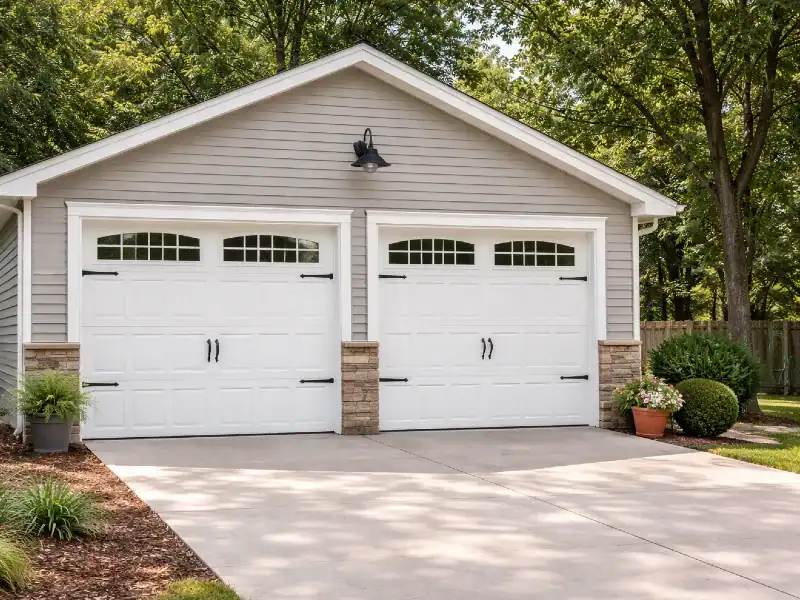
This is one of the most important questions. If your garage shares a wall with your house, the insulation in your door has a direct impact on your home’s energy efficiency. The outside air that seeps through an uninsulated door can make the adjacent rooms in your house harder to heat or cool. Attached garages benefit enormously from insulated doors, and the long term savings on energy bills can be substantial.
For a detached garage, the stakes are lower, but if you spend time in it working on projects, using power tools, or storing temperature-sensitive items, insulation still makes a big difference in comfort and protection.
What Climate Do You Live In?
If you’re in a region like Oklahoma where summer heat can be intense and winter temperatures drop significantly, garage door insulation pays dividends all year. Keeping the warmth inside during winter and slowing the invasion of hot outside air in summer helps your home stay comfortable and your energy costs manageable. If you live somewhere with mild, stable weather year-round, non-insulated doors may be perfectly adequate.
How Do You Use Your Garage?
If your garage is primarily used to park your car and store seasonal items, a non-insulated option might serve you fine. But if it doubles as a workshop with power tools, a gym, a playroom, or any space where you or your family spend meaningful time, climate control and noise management become critical. An insulated garage transforms that space into a more livable, usable extension of your home.
The R-Value Explained
You’ll often hear the term R-value when shopping for insulated garage doors. The R-value measures thermal resistance, how effectively a material resists the flow of heat. The higher R-values are, the better the door performs as a thermal barrier.
Non-insulated doors have an R-value of essentially zero, meaning they offer no meaningful resistance to heat transfer. Entry-level insulated doors might have an R-value of R-6 to R-9, while premium polyurethane-filled doors can reach R-12 to R-18 or higher. For attached garages in climates with extreme temperatures, aiming for an R-value of at least R-12 is generally considered good expert advice.
It’s worth noting that a higher R-value doesn’t just affect energy efficiency, it also tends to correlate with better durability, more effective noise reduction, and improved structural integrity in the door panels.
Cost Comparison: Initial Investment vs. Long-Term Savings
Non-insulated doors are generally cheaper, you might find a basic single layer steel door installed for $800 to $1,500. Insulated garage doors, with their multiple layers and foam cores, typically run from $1,500 to $3,000 or more depending on style, size, and materials.
However, the initial investment in an insulated option can pay off over time through reduced energy bills, fewer repairs to your opener and mechanical components, and greater durability of the door itself. Depending on your climate and usage, homeowners often recoup the cost difference within a few years. Beyond that, long term savings continue to accumulate, making the insulated choice financially smart over the life of the door.
There’s also the curb appeal factor. A premium insulated garage door enhances the exterior appearance of your home and can contribute to a higher resale value. Real estate professionals often cite garage doors as one of the highest-return home improvement investments.
Making an Informed Choice

So, when it comes to insulated vs non-insulated garage doors, which is better? For most homeowners — especially those with attached garages, those living in climates with extreme temperatures, or those who use the garage as a functional living or work space — an insulated garage door is the smarter long-term investment. The benefits of energy efficiency, noise reduction, durability, and climate control far outweigh the higher upfront costs, particularly when you factor in long term savings on energy bills and reduced maintenance.
Non-insulated doors still have their place. If you have a detached garage you rarely use, or if you’re working within a strict budget and don’t have significant temperature or noise concerns, they’re a perfectly functional and affordable option.
The best way to make the right decision is to consult with a local professional who can assess your specific situation. At The Garage Door Company in Edmond, OK, our team is ready to walk you through every option, from garage door materials to R-value ratings, so you end up with a door that truly works for your home. Whether you need a new installation, a spring replacement, or just some expert advice, we’re here to help.
Call us today at (405) 261-8389 or visit us at 1733 S Fretz Ave Suite D, Edmond, OK 73013 to request your free estimate. We look forward to helping you make an informed choice that protects your home, lowers your energy bills, and adds lasting curb appeal for years to come.