As a team specializing in door installation and repair, we know firsthand how overlooked cables can be. Most garage doors depend on multiple lines working in sync, and there are actually different types of garage door cables in every system. Since these cables consist of steel under constant tension, they’re highly vulnerable to wear and tear if not cared for properly. That’s why The Garage Door Company always recommends proactive garage door cable maintenance to keep garage door operations smooth and reliable.
Ready to learn more? This guide has everything you need to know about the various types of garage door cables, plus helpful maintenance and replacement tips that may come in handy.
How Do Cables Fit Into Your Garage Door System?
Used for both residential and industrial applications, garage door cables are one of those parts that quietly do their job inside the garage door components, but are involved in almost every operation. A well‑balanced garage door system has springs, cables, drums/pulleys, bottom brackets, tracks, and an opener. The garage door springs bear much of the weight, but it’s the lift cables (and safety cables) that connect the springs to the bottom of the door, allowing the door to open and close safely.
In practice, cables do the following:
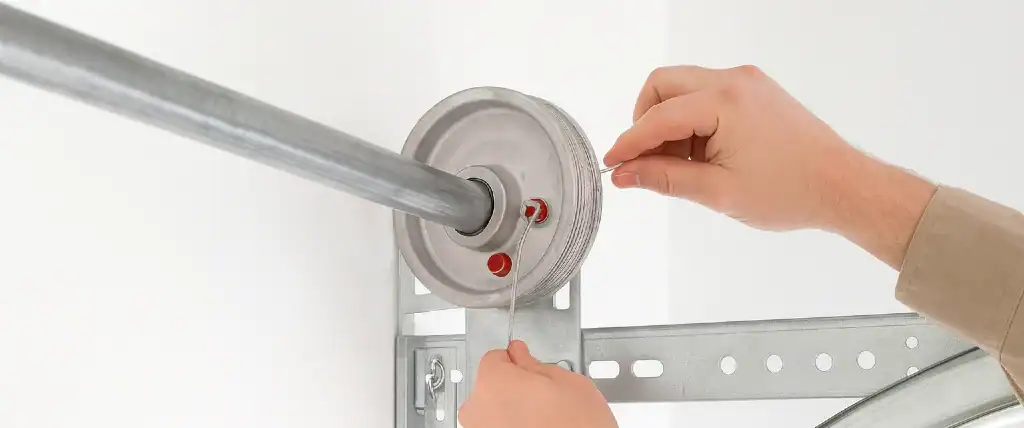
- The bottom brackets are connected to door cables, which go up through pulleys (in extension spring systems) or wrap around drums (in torsion spring systems).
- As springs stretch or twist, the cables transfer that force to lift the door or lower it smoothly.
- Components like the cable drum are sized based on whether the door is standard, high, or vertical lift. Different lifts mean different stresses on the cables.
- Safety cables or containment cables are in place to catch broken parts or keep springs under control when things fail.
Cables support the door’s weight together with springs. If they fail, many other garage door components follow, such as the springs, drums, tracks, and maybe even your opener.
Most Common Types of Garage Door Cables

During our repair services, we work on many types of garage door setups, and these are the most common garage door cables you’ll find:
1. Extension Cables or Extension Spring Cables
These are part of extension spring systems. If your garage door uses extension springs, the cable runs from the bottom brackets of the door, through pulleys, and attaches to the spring itself.
Purpose: As the door closes, the extension spring stretches; the cable helps guide that force so the door moves smoothly. When the door opens, the spring contracts and the cable pulls the bottom up.
Application: Most residential doors use this setup because it’s less costly and simpler mechanically.
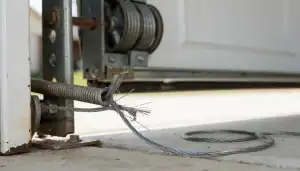
Potential issues: Cable ends or the pulley areas wear out. When an extension spring breaks, the associated cable is often frayed or damaged too. Also, if safety or containment cables aren’t in place, broken springs can whip out.
2. Torsion Cables or Torsion Spring Cables
These go with torsion springs. Springs are mounted above the door opening on a shaft. Each end has a drum, and cables wrap around those (sometimes called lift cables, although safety‑ and lifting‑and‑safety cables together make the full set).
Purpose: The torsion spring twists to store energy. When you open the door, the spring unwinds, the cable drums rotate, and standard lift cables, high lift cables, or vertical lift cables (depending on drum type) pull the door up.
Application: Heavier doors, larger doors, or doors in torsion spring systems where more precise balance is needed.
Potential issues: If cable diameters are wrong, or the cable doesn’t seat properly in the drum grooves, you’ll see rough operation or the cable coming off.
3. Safety Cables or Containment Cables
These aren’t for lifting. They’re a failsafe device, especially in extension spring systems, typically running through the middle of each extension spring. If a spring breaks, safety cables prevent parts from flying off and damaging door components or risking injury.
4. Emergency Release Cable or Cord
This is the rope or cord hanging from your opener’s mechanism. It’s not under high tension, but it’s very important. If power goes out or the opener fails, pulling the emergency release cable lets you open/close the door manually. If that cord breaks or is stuck, you lose a critical escape or access method.
How Do Broken Springs Affect Other Garage Door Components?
Broken springs are dangerous not just because the spring itself fails, but because they throw off balance and put extra load on garage door cables and other garage door components. From years of doing garage door repair for OKC folks, these are the effects we often see when a spring breaks:
- The door opens or lifts unevenly, often tilting toward one side of the door. That makes the cable on the “good” side work much harder.
- Cables slipping off drums or pulleys because the tension is wrong or the springs are broken. That creates wear on those parts.
- Rapid premature wear on pulleys, bottom brackets, rollers, and even the drum because the load isn’t balanced.
- Opener motors draw more power, sometimes causing circuit breaker trips or overheating.
- A broken spring can release energy suddenly, damaging adjacent parts or making cables break violently or catastrophically.
So even if you think the issue is “just a spring,” the ripple effects mean you need to consider cable repair or a full system inspection, too.
How Do Cables Break?
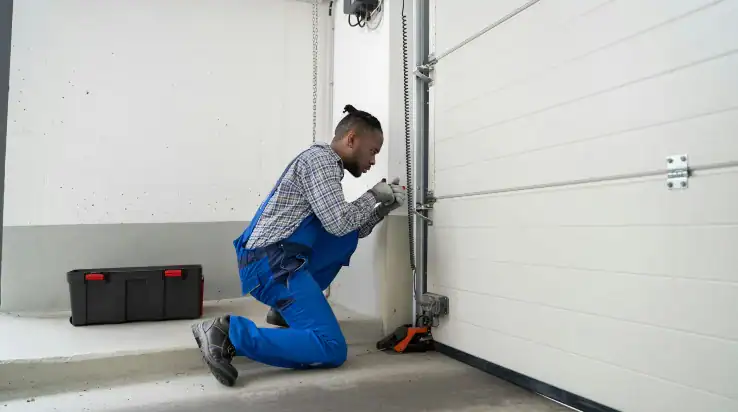
Even with good parts and expert installation, cables fail if neglected or when stressed too much. From what we’ve seen, here are the common causes of failure:
Wear & Tear Over Time
Every cycle (door opens, door closes) causes a bit of flex, small friction, and slight tension shifts. Over thousands of cycles, the cable strands start to fray.
Rust, Corrosion & Environmental Damage
Garages can get damp, especially if not sealed well or aired properly. Rust forms on cable wires and drums. Even galvanized steel rusts. And once rust starts, the cable becomes brittle, loses strength, and a broken cable or snapped strand becomes more likely.
Incorrect Installation or Poor Alignment
If lift cables are too long or too short, or pulleys/drums aren’t aligned, cables rub where they shouldn’t. For example, an extension spring cable might rub against a track edge because the bottom bracket was slightly bent. That small misalignment caused premature wear.
Neglect and Lack of Regular Maintenance
We often see homes where the door operates roughly, but homeowners don’t clean tracks, lubricate hinges and springs, or inspect door components until something breaks. If you ignore visible damage or warning signs, a small problem becomes a big one.
Improve Cable Longevity with Proper Garage Door Maintenance
You can strongly influence how long lift and safety cables last by doing regular maintenance. Below, you’ll find what we recommend that really helps prevent cables from wearing out or snapping.
- Monthly visual inspection: Look for frayed strings, rust, loose bottom brackets, slack in the cables, or signs that cables are rubbing. Visible damage early is a chance to avoid a full failure.
- Check door balance: Disconnect the opener (pull the emergency release cord), raise the door by hand to about halfway. If it doesn’t stay in place, tension in springs or lift cables is off. That tells us something needs adjustment.
- Keep tracks, pulley wheels, and drums clean: Dirt, rust, or paint splatter can make a track rough. Grease or lubricant in the wrong spot (on rollers, hinges, and drums) helps, but getting it on the cables where they seat improperly doesn’t.
- Use correct lubricant for springs and moving parts: For torsion springs, extension springs, bottom brackets, and hinges. This lowers friction, helps springs last longer, and helps cables avoid wear.
- Install safety components: If you have extension spring systems, safety cables or containment cables are nonoptional. They stop spring break‐offs from becoming disasters.
- Upgrade when needed: For heavier doors (or if you want to maximize overhead space with a vertical lift or high lift), you may need bigger drums, stronger cable diameters, or more robust standard lift/high lift drums to avoid stress.
When Do You Need Cable Repair/Replacement Services?
These are clear signs that garage door cable repair or replacement is needed:
- Frayed or rusted cables, or visible strands broken
- The door opens unevenly, lifts tilted toward one side
- Cable slipping off the drum or pulley
- The door feels heavier than normal, or the opener is straining
- A spring has broken, or you hear a loud pop from a spring failing
- Safety cables or containment cables are missing or damaged
- The emergency release cord is broken or won’t disengage the opener
- Standard lift or high lift drums are the wrong size or mismatched to the springs
- After any incident (impact, storm, misuse) that could affect springs or cables
If you notice any of these, schedule repair services. Let the experts look at all parts to make sure everything is safe, balanced, and built to last.
Should You Repair a Broken Cable Yourself?
Simply put, garage door cable repair/replacement is not an easy DIY for most homeowners. From years on the job, we can tell you when it’s doable and when it’s not safe.
You might manage small things:
- Tightening a loose bottom bracket
- Lubricating very minor cable rubbing
- Straightening a pulley wheel
But anything involving springs (torsion or extension springs) or anything where lift cables are carrying serious load should be done by experienced technicians. We’ve seen cases where people replaced an extension cable but didn’t reset spring tension correctly, so the door still sagged, or worse, a cable slipped off a drum after a week.
So, unless you’re a trained tech and have proper tools and experience, it’s better to call a pro for cable repair or replacement.
Call The Garage Door Company
If you live in Edmond, OKC, or nearby areas and suspect something is off with your garage door cables, don’t ignore it. We provide full service, from garage door installation to overhead garage door cable repair, cable inspections, spring cable replacements, lift and safety cable checks, emergency release repairs, and more.
Our experienced technicians handle the common torsion spring systems and extension spring systems found in most doors, inspect cable diameters, adjust drums, balance the door, replace broken springs or broken cable parts, and make sure your door operates correctly.
Contact our team at (405) 261-8389 today to get started!